Every child’s mind is a universe alive with questions and wonder. Curiosity is more than a distraction—it’s the compass of learning. Each question opens new doors; each experiment is a step toward wisdom.
When children are encouraged to ask, explore, and try, education becomes an adventure. Growth is measured by curiosity and the freedom to discover. Welcoming questions and protecting curiosity make learning an exploration.
If childhood is about exploration, adulthood is shaped by the confidence and wisdom that follow. This journey, from wonder to understanding, is nurtured with intention.
Our vision is a world where STEM education celebrates curiosity, encourages questions, and teaches children how to think, not just what to think. Science becomes a way to see and shape the world, building judgment, reasoning, and confidence.
By nurturing inquiry and laying a strong STEM foundation, we prepare children for thoughtful, resilient adulthood. We strive for a world where every young mind is empowered to explore, question, and create.
Exploring Possibilities: Innovation Unleashed at the Chawla Centre
Bimlesh
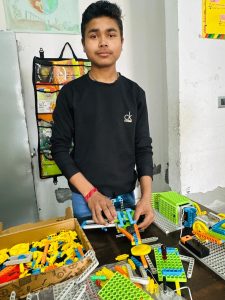
Aditya Pathak
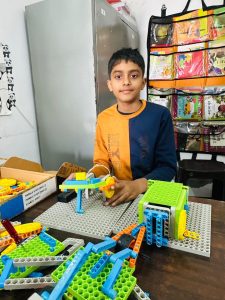
Radhika
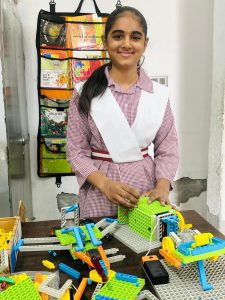
A handful of students at the Chawla Centre peered at their Micro:bit devices. Numbers changed as they tilted the screens. At first, it was just data—abstract and distant. But they were told only this: 0° means North.
There was no manual, no step-by-step instructions—just an idea.
The first compass they built displayed only the heading value. It worked. But curiosity asked for more: “Can we make it show North instead of 0?” The room buzzed with energy. The code was rewritten. Conditions added. When “North” finally appeared on the screen, there was a celebration.
But the questions didn’t end there: “Why not show all directions?” The project grew. Loops, logic, and testing followed. What began as a simple readout became a digital compass pointing to North, South, East, and West—a creation born of reasoning, not rote instruction.
What they really built was belief in their own problem-solving.
When Play Sparks Creation
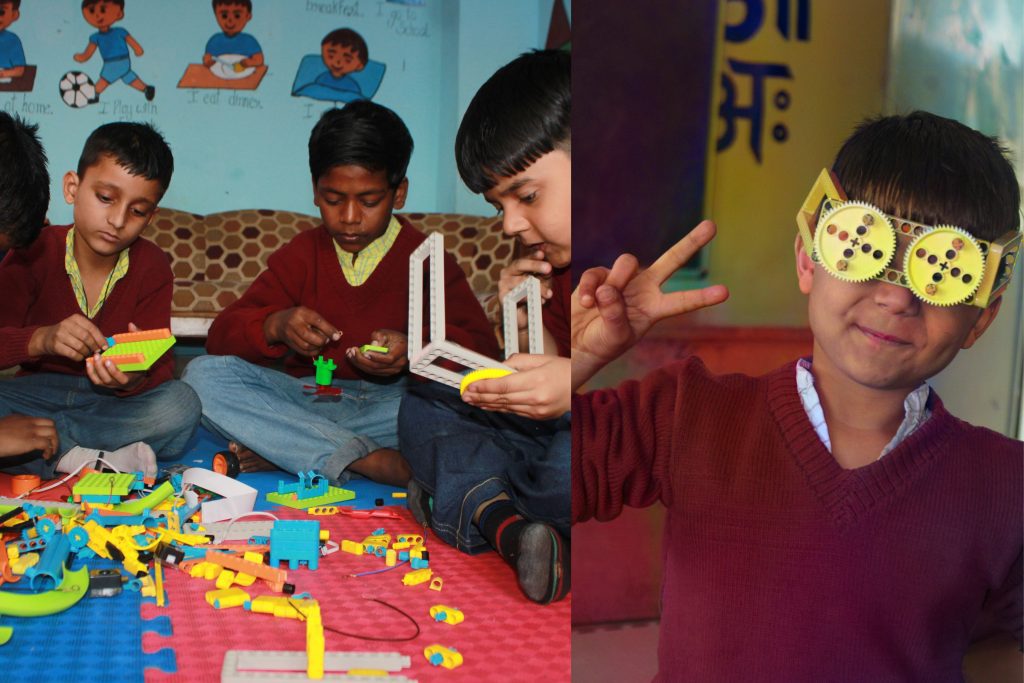
On another day, students played with a “Jukebox” program, making sounds by touching pins. It was fun. But soon someone wondered: “What if each button made a different sound?” More code, more wires, more discovery. The Jukebox transformed into a mini guitar, as students experimented, composed, and created music from code and circuitry.
They weren’t just following instructions—they were inventing.
A Young Inventor Emerges: Irshad’s STEM Journey

Irshad, just 8 years old and a Grade III student at Literacy India, is the youngest among his three siblings. His father works tirelessly as a daily wage welder to provide for the family. In 2023, Irshad entered a classroom for the very first time as a Class 1 student. Initially, he was a quiet, average learner, still adjusting to the new environment.
Yet, even then, Irshad’s curiosity was boundless. He and his friends—Anjesh, Jatin, Dhyanpal, Lakshman, Suraj, Arushi, and Himanshi—stood out as energetic, mischievous, and full of potential. Together, they would collect discarded bits of plastic and wood, transforming them into simple inventions—a car, a dustbin, anything their creativity conjured. While Irshad sometimes struggled to explain scientific ideas, his knack for building spoke volumes.
Literacy India’s STEM-based teaching encouraged Irshad to learn through hands-on activities. He was motivated to experiment, ask questions, and connect hands-on activities to the science he learned in class.
One day, Irshad arrived with a motor, a battery, and a bulb from home. With encouragement from his teacher and guidance from his older brother, Dilashad—a fellow student and mentor at Literacy India—Irshad tried various ways to connect the pieces. After several attempts, the bulb finally glowed. In that moment, Irshad’s face shone with the joy of discovery: he understood how circuits worked, how energy flows, and how perseverance leads to success.
What’s even more remarkable is that Irshad soon started guiding his classmates through new projects. He eagerly shared his newfound knowledge, encouraged everyone to participate, and transformed challenges into opportunities for teamwork and exploration.
Through STEM, Irshad and his classmates are learning more than just science; they are developing confidence, leadership and a lifelong passion for discovery that will shape their future.
The Silence of Struggle: How Anjali Built Her Way to Understanding

Anjali Shaw, a quiet 8th grader at Literacy India Chingrighata, never missed a class and always finishes her work. Yet behind her diligence, teachers sensed an invisible struggle. Science lessons felt abstract and confusing—ideas floated above her, never becoming clear. Over time, Anjali withdrew, her curiosity dimmed, and her hand stopped rising in class.
Everything changed with the arrival of the “I Love Science Kit.” Suddenly, science was no longer just words and diagrams. Anjali began experimenting with real objects, making discoveries with her own hands. Hesitation gave way to excitement as she transformed from a silent listener to an active explorer.
The turning point came during a lesson on mirrors and lenses. Anjali learned how lenses bend light and form images. Inspired, she used simple materials to build her own projector—turning a small mobile phone screen into a large wall display. This wasn’t just a classroom project—it was proof that she truly understood.
Where scientific concepts were once blurry and distant, hands-on learning brought them into sharp focus. Anjali’s journey shows that with the right tools and encouragement, every student can turn struggle into discovery—and project their understanding onto the world.