
From Traditional Skills to New-Age Livelihoods

Beyond the Mask: Women of Charida Step into Entrepreneurship
In Charida, a village in the Baghmundi block of Purulia district, West Bengal, Chhau masks are much more than colourful objects. They are part of the region’s cultural life and an essential element of Purulia Chhau, the traditional folk dance known for its powerful movements, elaborate costumes and dramatic masks. Inspired by stories from mythology—including the victory of Goddess Durga over Mahishasura—the masks bring deities, demons and animals to life on stage.
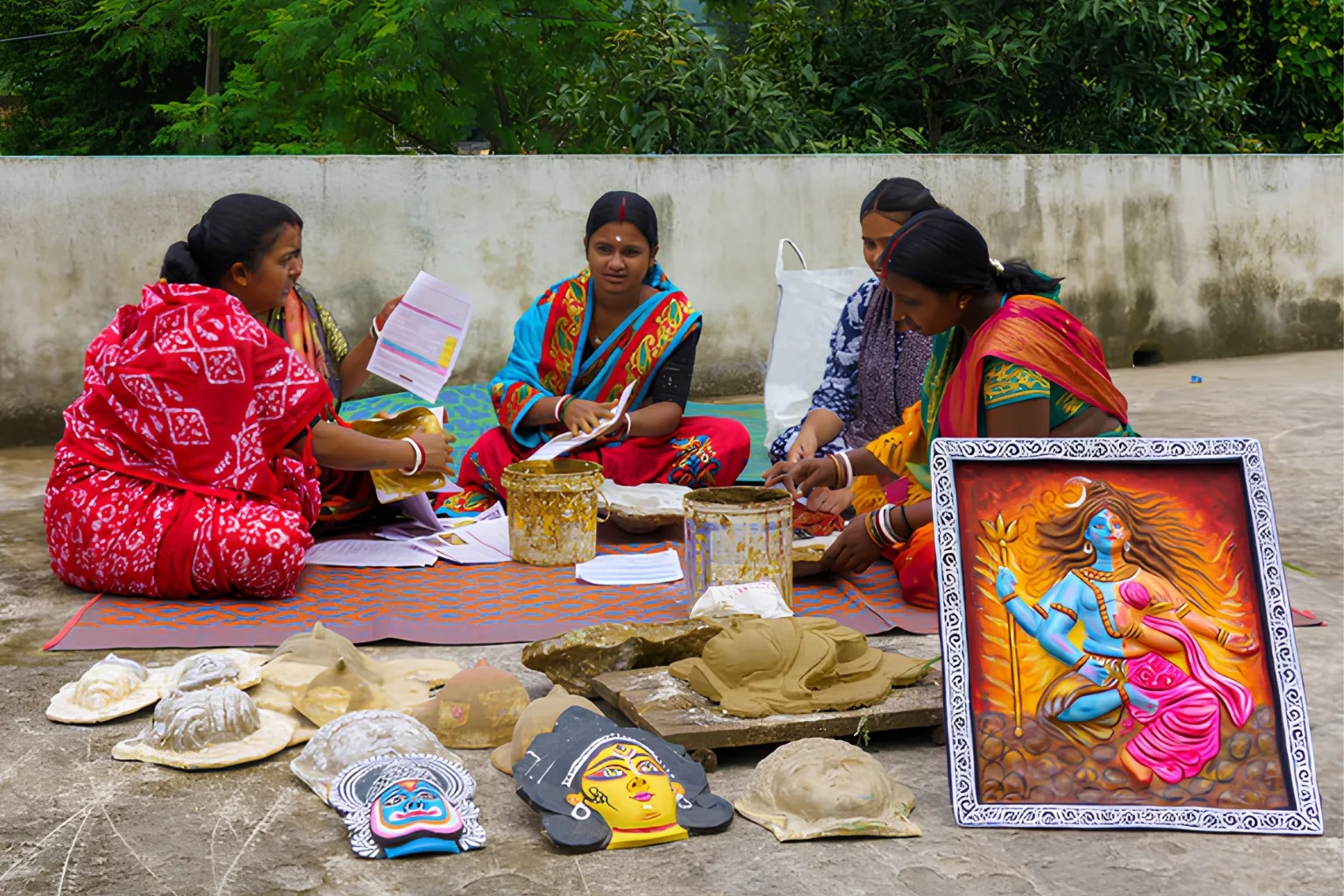
For generations, the Sutradhar community has carried this craft forward. Charida is home to more than a hundred mask-making artisans, predominantly men. Yet behind many of the masks are women whose contribution has often gone unseen. Wives, daughters and sisters have helped prepare paper pulp, paint intricate designs, add finishing touches and decorate the masks with ornaments. Their skill has been essential to the work, even when their role was recognised mainly as part of the family business rather than as an independent profession.
The craft is also evolving with changing tastes and markets. Alongside traditional Chhau designs, artisans are experimenting with masks inspired by African and Latin American styles. During Purulia’s festive and tourist season, from October to March, visitors bring greater demand to the village. But for women, the opportunity to turn their own skills into independent businesses has remained limited.
After a local survey highlighted women’s contribution and the potential for enterprise, Literacy India began working through its Lowakui Centre, close to Charida, to help women take the next step. Seven women who wanted to establish mask-making enterprises were brought together. With modest seed funding from Literacy India, they are working towards developing their own products, including contemporary designs, and exploring ways to reach customers beyond their immediate locality.
The local Panchayat has encouraged the initiative by allowing the women to use the community hall as a shared workshop. The space gives them a place to work together, exchange ideas and begin building their enterprises. Literacy India’s Grass Root Business Incubation Programme (GBIP) is helping them understand marketing and explore digital platforms that may open up wider markets.
The intention is not to compete with or replace the businesses run by their husbands or other family members. It is to create room for women to earn recognition for their own work, build confidence and establish a foothold in the market in their own names.
Women with Their Own Ambitions
Bandana Sutradhar: Building Her Own Enterprise
Originally from Bishnupur, Bandana has lived in Charida for 22 years. She learned mask-making while assisting her husband, Tapas Sutradhar, and now creates mask products herself. One challenge is the off-season, when her husband travels for idol-making and their shop remains closed. With Literacy India’s support, Bandana hopes to manage the shop independently and explore online platforms so her work can reach more customers.
Nipa Sutradhar: Looking Towards International Markets
Nipa was born in Charida and learned mask-making from her father as a child. She continued the craft alongside her husband, Gobinda Sutradhar, but now wants to produce and sell masks through an enterprise of her own. She hopes to reach international markets and turn her traditional knowledge into a sustainable livelihood. As Nipa puts it, “I am trying to become an entrepreneur so that I can compete in the international market.”
Rimpa Roy: A Young Artisan with a Dream
Rimpa learned Chhau mask-making by observing local artisans. She now creates masks and sells them to different shops while continuing her studies. Without a family-owned shop, she is determined to build a business of her own and hopes to open a shop in Purulia town. She says, “I am hoping to open a shop in Purulia town. Literacy India has helped us a lot and made me feel proud of myself.” Her ambition speaks to a desire not only to earn, but also to be recognised for her own skill and choices.
Charida’s masks carry generations of artistic knowledge. Through this initiative, Literacy India hopes that the women behind them can also be recognised in their own right—not only as wives, daughters or sisters of established artisans, but as skilled creators and entrepreneurs.
Growing Beyond Soil: Young Learners Explore Hydroponics
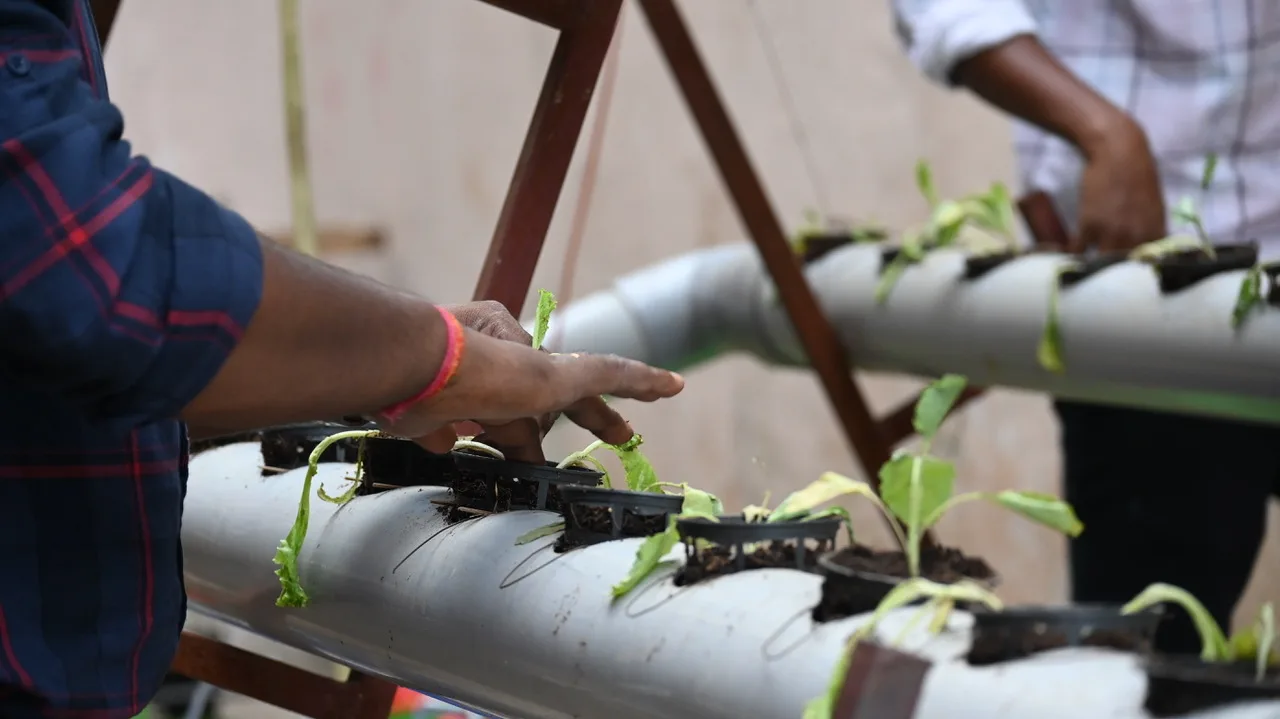
What might farming look like when plants are grown without soil? Four students from Purulia explored this question during a 10-day residential hydroponics training programme. The programme introduced them to soilless cultivation and helped them understand both the technical requirements and the possible livelihood applications of this approach.
Under the guidance of hydroponics expert Sunil, the students learned about the principles of hydroponics and how it differs from conventional soil-based farming. They were introduced to systems such as Nutrient Film Technique (NFT) and Deep Flow Technique (DFT), including how different setups are prepared and installed.
The training moved from systems to the everyday decisions that influence plant growth. Students learned how to prepare nutrient solutions for different crops, including leafy vegetables, tomatoes, capsicum, cucumbers and strawberries. They were introduced to monitoring pH and total dissolved solids (TDS), and to the importance of water temperature and oxygen levels for healthy growth.
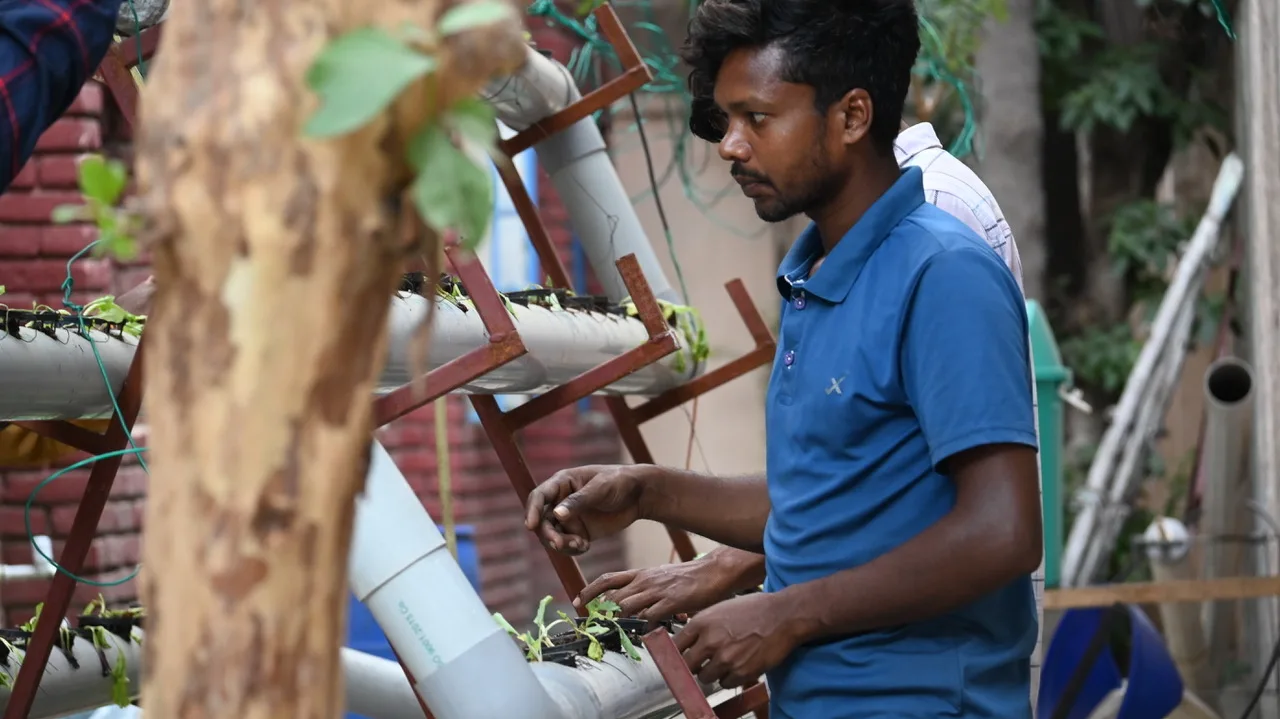
They also explored seed selection, nursery preparation, transplantation, pruning, grow-bag techniques and plant care. Sessions covered the identification of plant diseases and nutrient deficiencies, protected cultivation structures, irrigation systems, exotic vegetable production and growth-booster sprays. The programme also introduced the students to crop selection, production planning and marketing opportunities for hydroponically grown produce.
By the end of the 10 days, the four students had developed a foundational understanding of hydroponic systems, nutrient and water management, crop care, plant health and the commercial considerations involved in this form of cultivation. The training was an important first step; applying the knowledge consistently in a real growing environment will be necessary to build practical confidence and assess its local potential.
Taking the Learning Forward
The next phase will focus on helping students put their learning into practice. They will be encouraged to share what they have learned with fellow students, farmers and interested community members, creating awareness of alternative cultivation methods.
Literacy India will also explore the feasibility of setting up a small hydroponics demonstration unit. Initial trials could focus on suitable crops, particularly leafy vegetables, selected according to local conditions, available resources and market demand. Continued technical guidance would help the students manage nutrient solutions, monitor plant health and address cultivation challenges as they arise.
If early trials and a market assessment show promise, a small-scale business plan could be developed. Progress would need to be reviewed periodically to understand the students’ practical skills, cultivation results and readiness to pursue hydroponics as a livelihood or enterprise.
“In my village in Purulia, where water is scarce, hydroponic farming training has given me a new ray of hope. I now believe that I can start hydroponic farming at my own home and explore new opportunities to grow fresh vegetables with limited water.”
— Sadhu Sing Mura, Sonkupi Village, Purulia
“Earlier, water scarcity was a major challenge in our village, Lowakui. With the availability of water through a well and borewell supported by Literacy India, I now feel encouraged to take up hydroponic farming. The training has given me the knowledge and confidence to explore this innovative method of cultivation and promote it in my village.”
— Sushil Sing Mura, Lowakui Village, Purulia
“The hydroponic farming training has been very effective and beneficial for me. It has enhanced my knowledge and given me the confidence to share what I have learned with my children and fellow farmers. I hope to encourage them to adopt hydroponic farming at home, enabling them to grow fresh vegetables and explore sustainable farming practices.”
— Srikanta Soren, Munnibera Village, Purulia
For now, the training has opened a door: it has given four young learners a first grounding in a modern agricultural technique and a chance to explore where that knowledge might lead.